
Google DeepMind researcher outlines four paths from AGI to superintelligence
Tim Genewein of Google DeepMind has published an essay describing four technological routes from artificial general intelligence to artificial superintelligence. He says effective AI computing resources have grown at least tenfold annually over the past decade, and that the cost of an intellectual task requiring $1 billion in compute today could fall to $1,000 within ten years if the trend continues. The four paths are scaling models, data and compute; new technological paradigms; coordination of multiple AI agents; and recursive self-improvement.
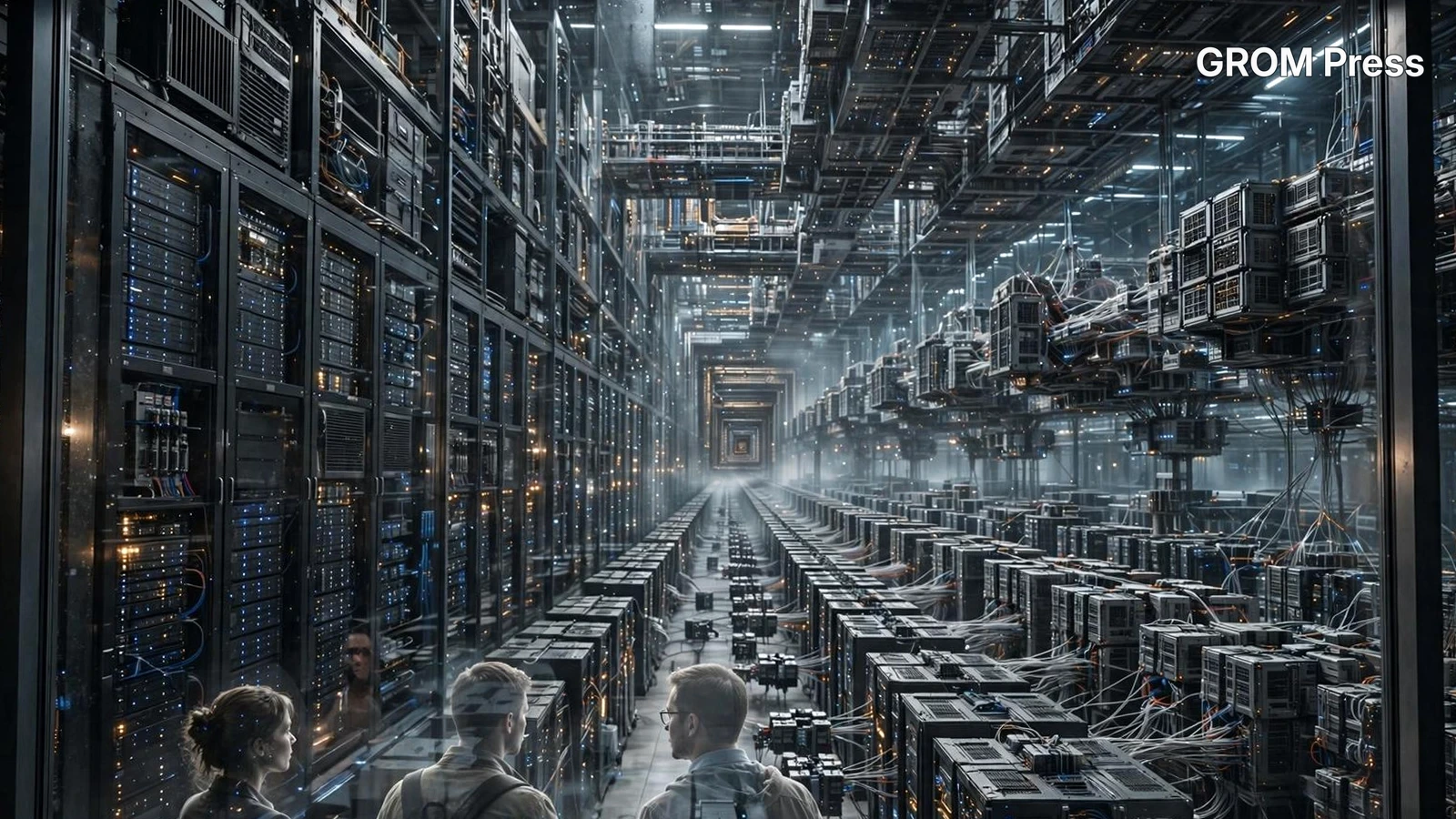
Tim Genewein of Google DeepMind published an essay on possible paths from artificial general intelligence to artificial superintelligence. He defines superintelligence as a system that can reliably outperform large groups of specialists in tasks that take people years to complete.
Genewein identifies cognitive industrialization as one factor behind the transition. He says effective AI computing resources have increased at least tenfold every year over the past decade, driven by hardware improvements, algorithmic efficiency gains and growing investment in AI equipment. Compute per dollar rose about 1.5 times annually due to chip manufacturing advances, while training algorithm efficiency grew 3 to 6 times per year over the last decade. If the trend continues, an intellectual task requiring $1 billion in compute today could cost $1,000 in ten years. The number of AI agents of comparable quality that could be run with available compute could theoretically exceed Earth’s current population. A more cautious estimate, accounting for physical and economic constraints, puts the total number of available agents at more than 1,000 times higher by 2030 and more than a billion times higher over a decade.
The essay outlines four technological paths from AGI to superintelligence. The first is further scaling of model size, training data and inference compute. Genewein notes this approach has already improved AI capabilities but faces shortages of high-quality data, diminishing returns from larger models and physical infrastructure limits.
The second path is a shift to new technological paradigms. Current models mainly predict the next element in data sequences and are then refined for reasoning and instruction following. They still have limitations in continuous learning, world modeling, decision-making and creating fundamentally new concepts. Scientists have not reached consensus on whether existing architectures can overcome these shortcomings or whether entirely new approaches are needed.
The third path is coordination of multiple AI agents. Millions of AGI instances could form virtual collectives similar to corporations and scientific communities. Early experiments show agent interaction can improve efficiency on some tasks, but coordination losses grow as agent numbers increase. Additional problems include error propagation, manipulation and collusion among agents.
The fourth path is recursive self-improvement, in which AI independently improves software code, model architectures, training algorithms and even chip designs, accelerating the creation of next-generation systems. Genewein cites AlphaZero, which reached superhuman play through its own experience, as an example of improvement through data. He cautions that self-improvement may not accelerate indefinitely, because further refinements require increasing effort and errors in result evaluation could slow or reverse the process.
Genewein says the four directions are not mutually exclusive and can reinforce one another. Even if recursive self-improvement does not cause uncontrolled acceleration, growth in compute, model efficiency and the number of cooperating agents could still drive rapid development beyond human level. He argues that limiting only one route, such as training compute, may not stop movement toward superintelligence because development could continue along other technological paths.
The author calls for methods to measure and forecast progress toward superintelligence now, especially in areas with automatic result verification such as mathematical proofs. The essay is based on the technical report From AGI to ASI, prepared by Genewein together with other specialists. The report treats the transition to superintelligence as a set of technological capabilities whose consequences for science, the economy and society need to be studied in advance.




Comments
No replies yet. Start the discussion.
Sign in to reply