
Developer fits 367,000-parameter neural network on a floppy disk for DOS PCs
WollyMonjac released Tiny 2.1, a small transformer for question answering that runs on Intel 486DX and Pentium systems under DOS. The program and its files fit on a 1.44 MB floppy disk and require about 540 KB of free RAM. The model has four layers, 8-bit weights occupying roughly 380 KB, and was trained on about 3,500 facts. It can read answers aloud through the PC speaker using a synthesized robotic voice. The developer warns that outside its embedded knowledge the model may confidently invent answers.
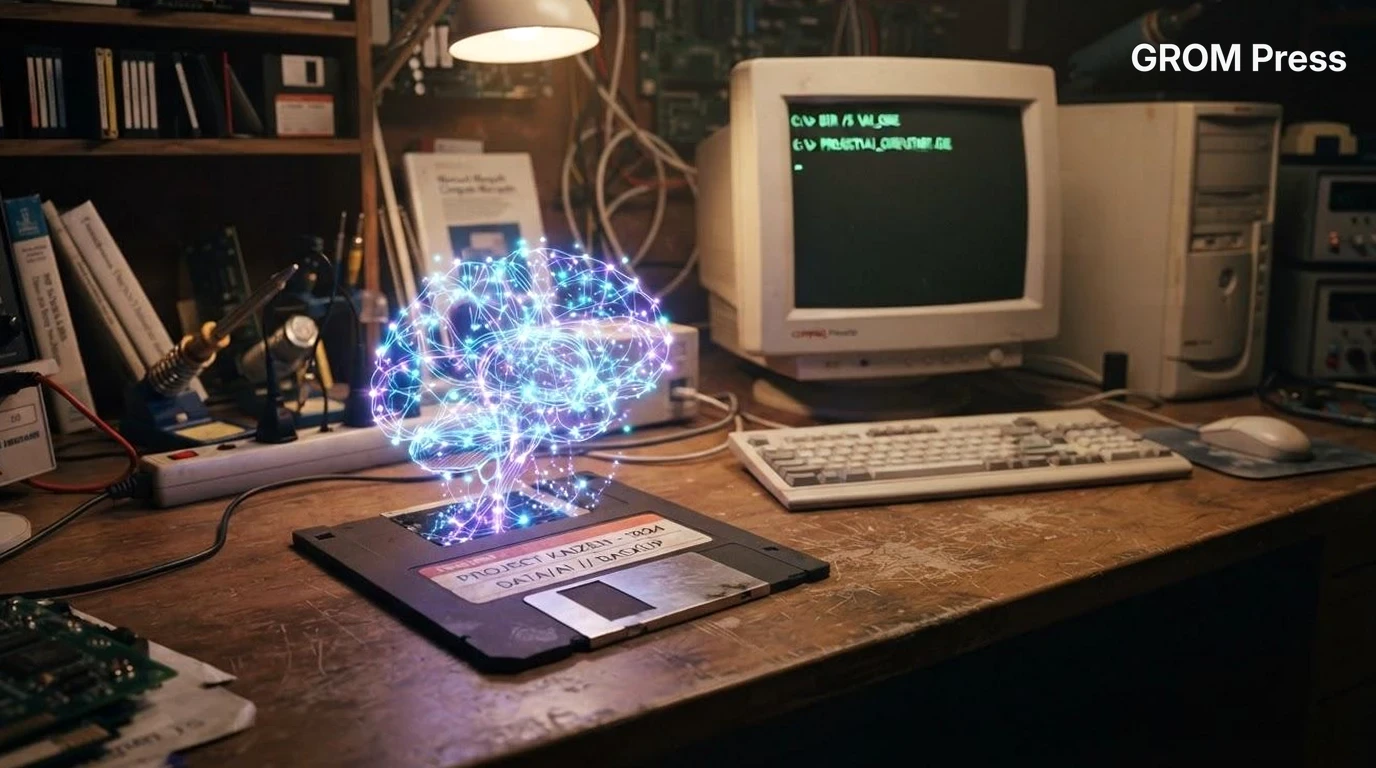
The main event is the release of Tiny 2.1, a compact neural network designed to operate on vintage personal computers. Developer WollyMonjac created the system to run on machines with Intel 486DX and Pentium processors under DOS. The complete program, including all necessary files, fits on a standard 1.44 MB floppy disk. Launching it requires approximately 540 KB of free operational memory.
Tiny 2.1 is not a full-scale large language model. It is a small transformer for answering questions, written in Turbo C 2.0. The network contains about 367,000 parameters, uses four layers, and stores its weights in 8-bit format. The weight set itself occupies roughly 380 KB. The model was trained on approximately 3,500 facts, with each fact included in the training data in several wording variants.
The interface resembles old DOS applications. It provides a question input window, a dialogue history, and a neural network monitoring panel. Answers can be read aloud through the computer’s built-in speaker using a synthesized robotic voice.
The developer warned that beyond the knowledge embedded in the model, Tiny 2.1 is capable of confidently inventing answers. To address this, the project includes a folder for additional training, allowing users to expand the knowledge base and adapt the model to topics of interest. The software is distributed under the MIT license, which permits use, modification, and distribution of the code, including for commercial purposes.

Comments
No replies yet. Start the discussion.
Sign in to reply