
The Great Stink of 1858: How the Smell of the Thames Forced London to Build a Sewer System and Defeat Cholera
In the hot summer of 1858, the Thames smelled so bad that members of parliament fled the chamber. From this misfortune arose the sewer system of engineer Joseph Bazalgette, which still operates today.
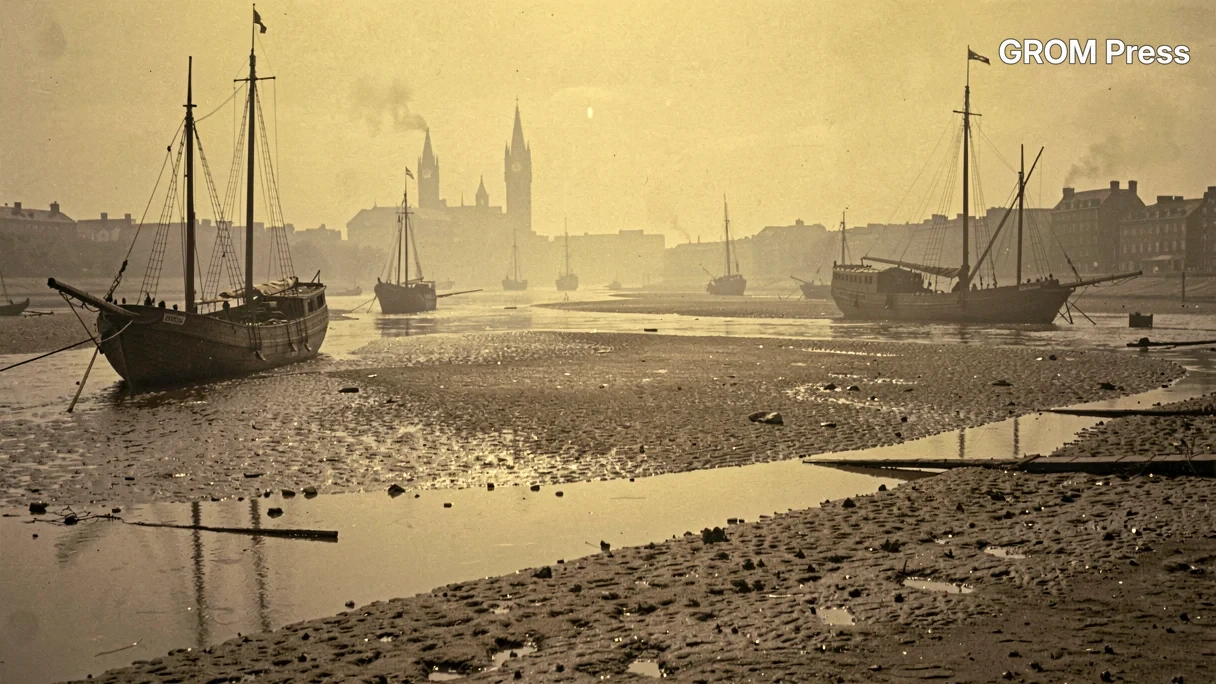
In June 1858, members of the British Parliament tried to work in the newly rebuilt Palace of Westminster. The building stood directly on the bank of the Thames, and that year it was the worst place in London. The heat lasted for weeks, the water level dropped, and the river turned into an open sewer. Windows were covered with curtains soaked in chloride of lime, but the smell still penetrated inside. Newspapers gave that summer a name that remained in history: The Great Stink.
Strangely, it was this nuisance, and not thousands of deaths from cholera in previous decades, that finally forced the authorities to act. A few years later, London received a sewer system that became a model for the whole world. Its author, engineer Joseph Bazalgette, probably saved more lives than many doctors of his era.
The city that washed everything into the river
By the mid-19th century, London was the largest city in the world, with about two and a half million people living in it. The infrastructure remained almost medieval. Waste was collected in cesspools under houses, and their contents were removed by night soil men. This was expensive, and the pits often overflowed.
Paradoxically, technical progress worsened the situation. Flush toilets were becoming more widespread in homes. They carried waste out of the dwelling, but where? Into old storm drains, originally intended for rainwater and leading straight into the Thames. In the late 1840s, seeking to get rid of cesspools, city authorities effectively legalized this route. The river, from which many Londoners took drinking water, became the main collector.
There is a well-known episode that well conveys the atmosphere. In 1855, the great physicist Michael Faraday sailed on a steamboat along the Thames and threw white cards into the water, checking at what depth they would disappear from view. The water was so murky that the cards disappeared almost immediately. Faraday wrote about this in the newspaper The Times, and the satirical magazine Punch responded with a caricature in which the scientist hands his business card to the dirty Father Thames.
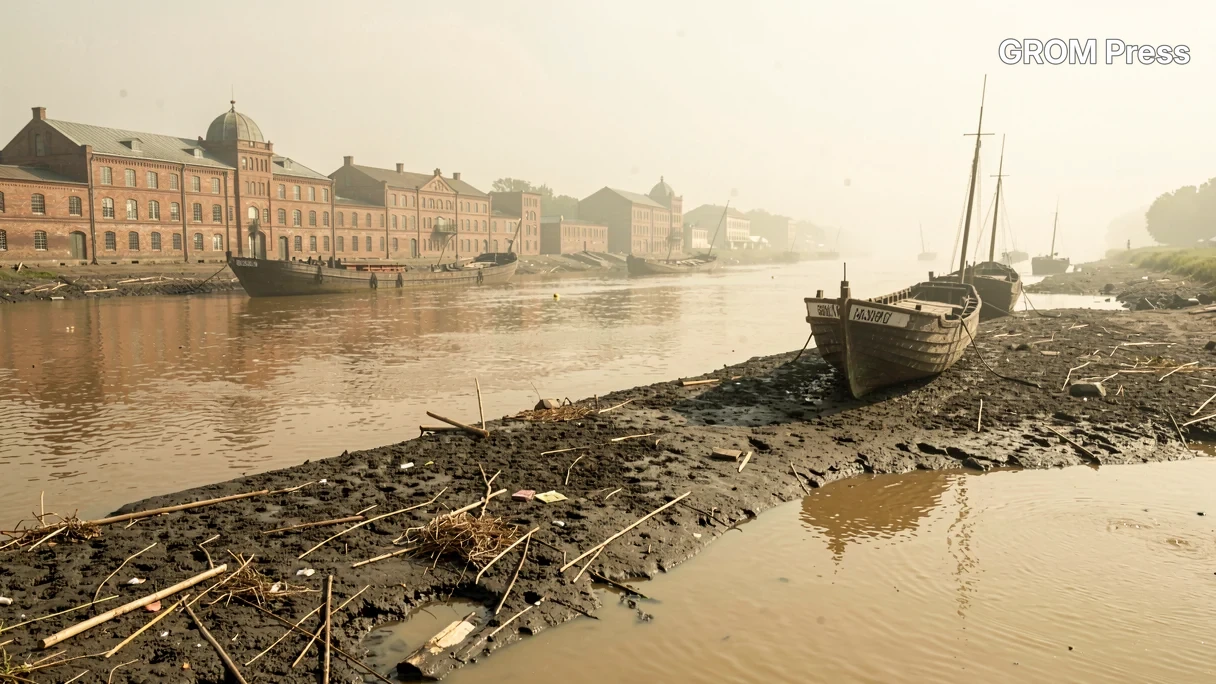
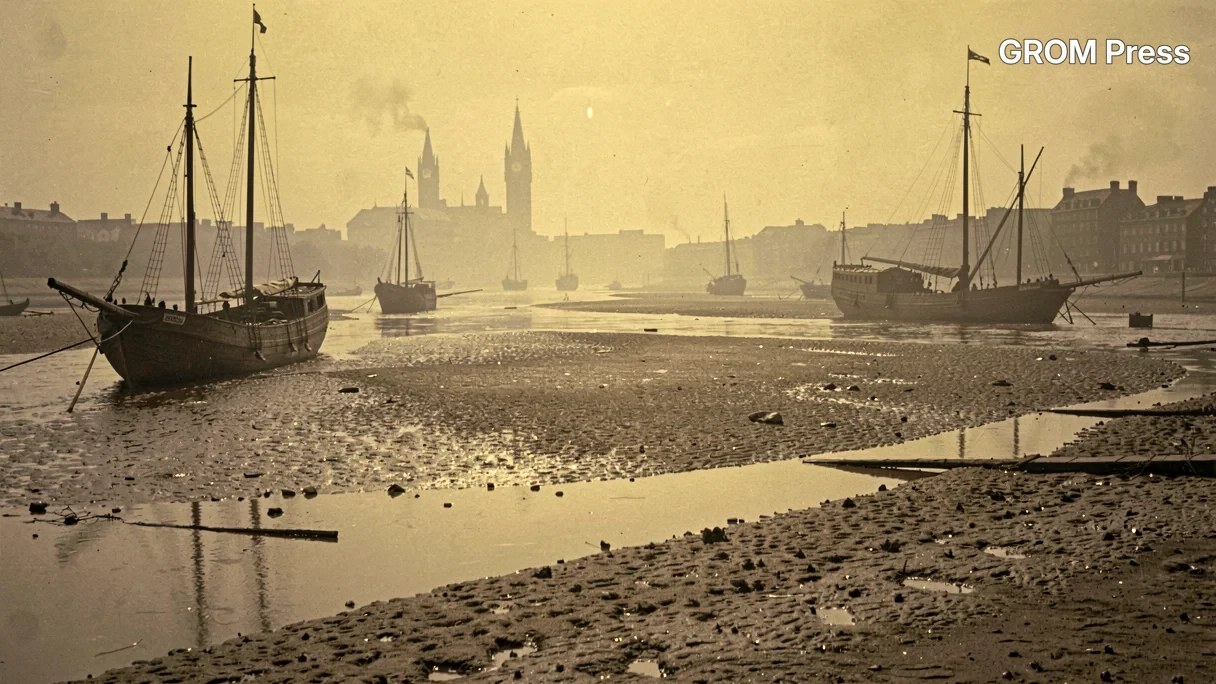
In the summer of 1858, all these troubles came together. The heat was unusual, there was almost no rain, and the Thames became shallow. At low tide, strips of silt covered with rotting waste were exposed along the banks. In addition to household sewage, waste from slaughterhouses, tanneries, and gas works entered the water. The authorities tried to fight the smell by dumping large quantities of lime into the river and onto the banks, but this hardly helped. Passengers on river steamboats, according to contemporaries, covered their faces with handkerchiefs, and boatmen complained of nausea.
The press did not mince words. Newspapers wrote about the river as a disgrace to the capital of an empire that owned half the world but could not cope with its own sewage. For Victorian England, proud of its engineers, railways, and steam engines, this was especially humiliating.
Cholera and the debate over "bad air"
The real threat was not the smell, but cholera. This disease came to Britain in 1831 and returned again and again. The epidemics of 1848-1849 and 1853-1854 claimed tens of thousands of lives in London. People died within hours from dehydration, and no one really understood why.
The miasma theory prevailed at the time. It was believed that diseases were carried by "bad air", foul vapors of decaying substances. From the point of view of this theory, the smell of the Thames was not just an unpleasantness, but a deadly danger. That is why the Great Stink so frightened the deputies: they were sure they were breathing contagion.
Meanwhile, doctor John Snow had already in 1854 gathered convincing data that cholera was transmitted through contaminated water. During an outbreak in the London district of Soho, he mapped cases of illness and showed that they clustered around a single water pump on Broad Street. At his insistence, the handle was removed from the pump. Snow died in June 1858, at the height of the Great Stink, without seeing recognition of his theory. It was finally accepted only years later, when microbiologists discovered the causative agent of the disease.
The irony of history is that London's sewerage was built to get rid of the smell, that is, for the "wrong" reason. But since it removed waste further away from sources of drinking water, it defeated the real enemy as well.
The man with a plan
In 1855, the Metropolitan Board of Works was created in London, a single body responsible for the city's infrastructure. Its chief engineer was Joseph Bazalgette, son of a naval officer, descendant of French émigrés. Before this, he had worked on railway construction and had already been working on London sewer reform projects for several years.
He had a plan. The problem was money and politics: different departments argued over authority, projects were rejected, redone, sent for expert review. The Great Stink cut this knot. In the summer of 1858, parliament passed a law with unusual speed, in just a few weeks, which gave the Board the right to borrow money and build. The bill was introduced by Benjamin Disraeli, then Chancellor of the Exchequer.
Bazalgette's idea was simple in conception and grand in execution. Along the Thames, from the north and the south, huge intercepting sewers were laid. They ran from west to east, slightly sloped, and collected sewage from old ditches that previously flowed into the river. Then the waste was carried far to the east, beyond the then-city limits, and discharged into the Thames at low tide, so the current would carry it out to sea.
Brick, cement and a margin for the future
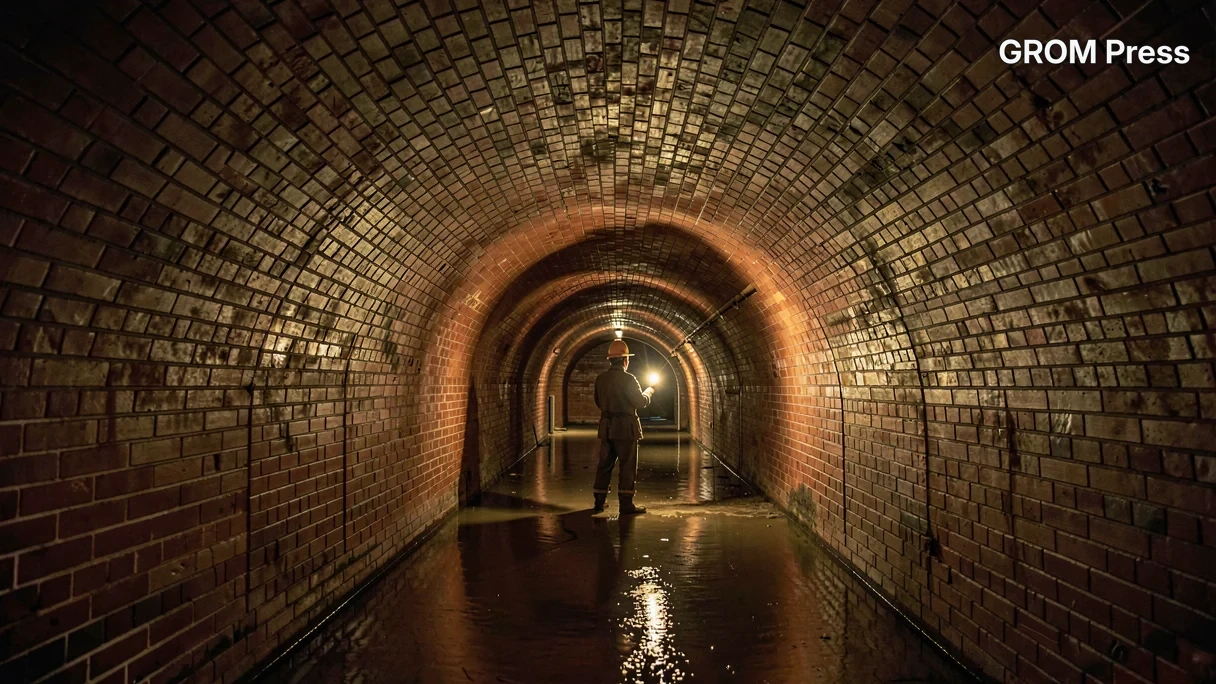
The scale of the work is astonishing even today. The system included, according to common estimates, about 130 kilometres of main sewers and more than 1,500 kilometres of street sewer pipes. Hundreds of millions of bricks were used in construction. Where gravity flow was impossible, steam pumping stations were installed, lifting sewage to the required height.
Bazalgette was demanding about materials. He insisted on the use of Portland cement, which was then a relatively new product, and introduced strict quality checks. This type of cement becomes stronger over time under water, and this is one of the reasons why Victorian tunnels still serve today.
Another of his decisions is often called genius. Having calculated the required pipe diameter based on population and rainfall, Bazalgette, according to stories, then increased it by about two times, reasoning that such a system would not be built a second time. This margin allowed the sewerage to survive the multiple growth of the city in the 20th century.
Construction took place in the very heart of the living city. Deep trenches were dug in the middle of streets, traffic was blocked, house foundations, underground rivers and already existing tunnels were bypassed. The northern part of the system in the east was closed by the Abbey Mills station, another pumping station with lavish architecture, which is also often compared to a temple. The main work stretched for about one and a half decades, and by the mid-1870s the system as a whole was completed.
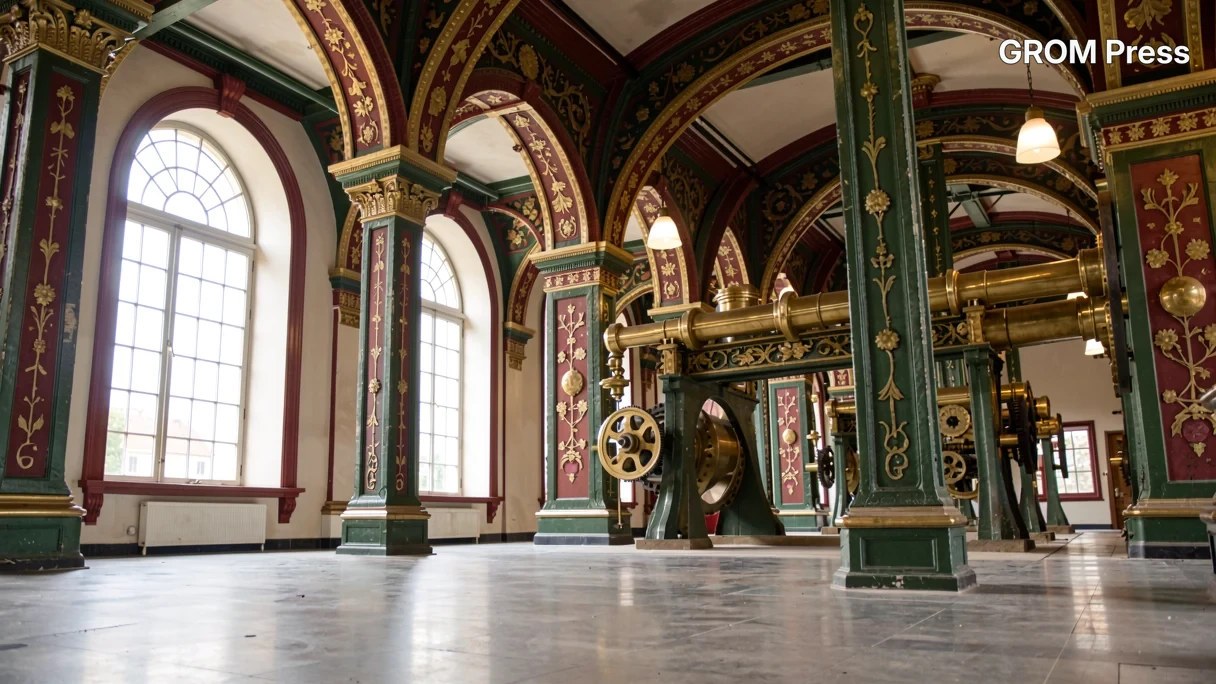
Part of the project were also embankments. On the north bank of the Thames, Victoria Embankment appeared, under which the main sewer, a subway line and other utilities were laid. The river became narrower and faster, and London gained new streets and gardens. Pumping stations were built with unexpected luxury: the Crossness station on the south bank, opened in 1865, is decorated with painted cast-iron columns and openwork grilles, for which it was nicknamed the "Cathedral on the Marshes". Today it is a museum.
Bazalgette's activity was not limited to sewerage. Under his leadership, the Metropolitan Board of Works rebuilt several bridges across the Thames, including Hammersmith, Putney and Battersea, and laid new streets through tight old quarters. The famous today Shaftesbury Avenue and Charing Cross Road appeared precisely in that era. Essentially, Bazalgette became one of the main creators of the London we see today, although his name is known far less than the names of palace and cathedral architects. His main creation simply lies underground, and most citizens will never see it.
The system's stress test came quite soon. In 1866, London experienced the last major cholera outbreak. It struck the eastern part of the city, which was not yet connected to the new network, and where one of the water companies supplied residents with poorly purified water. Statistician William Farr traced the connection between the outbreak and this water supply. Areas already connected to Bazalgette's sewers suffered much less. After the work was completed, cholera epidemics in London ceased.
A few final facts
- In the summer of 1858, the curtains in Parliament were soaked in chloride of lime in hopes of dulling the river's stench.
- Discharges from the eastern outfalls remained untreated for a long time. When the pleasure steamer "Princess Alice" sank nearby in 1878, hundreds of people died, and the polluted water likely increased the number of victims.
- For his work, Bazalgette was knighted in 1875.
- A significant portion of Victorian sewerage still operates today, more than a century and a half later.
- To relieve the old system, a new deep tunnel was built under the Thames in the 2020s, known in London as the "super sewer."
Invisible monument
On Victoria Embankment stands a modest monument to Bazalgette, past which most passersby walk without looking. This is fair in some sense: the best infrastructure is that which is not remembered. We notice pipes, bridges, and networks only when they stop working. Even the new "super sewer" under the Thames was needed not because the old system broke down, but because the city over a century and a half grew far beyond the boldest calculations, and during heavy rains the collectors overflowed, discharging excess directly into the river, as in the days before Bazalgette. The story of the Great Stink reminds us that behind the familiar comfort of a big city stand decisions made once under the pressure of crisis, and people who thought a little further than the task required. Bazalgette built for the stench and for his century, but he built for health and for ours.



Comments
No replies yet. Start the discussion.
Sign in to reply