
Researchers propose second distant planet, Planet X2, beyond Neptune
A team from Kindai University, the University of Washington and the University of Southern Queensland says computer models of the Solar System's 4.5-billion-year evolution fit the orbits of distant icy bodies better when a second hypothetical planet, Planet X2, is included. The best-fitting model gives it about two Earth masses, a semi-major axis of 350-500 astronomical units, a closest approach of about 200 astronomical units and an orbital inclination of 1-15 degrees. The researchers say this is separate from the Planet Nine hypothesis, which posits a more massive object of 4-6 Earth masses. The hypothesis remains unproven and could be tested by the Vera C. Rubin Observatory in Chile.
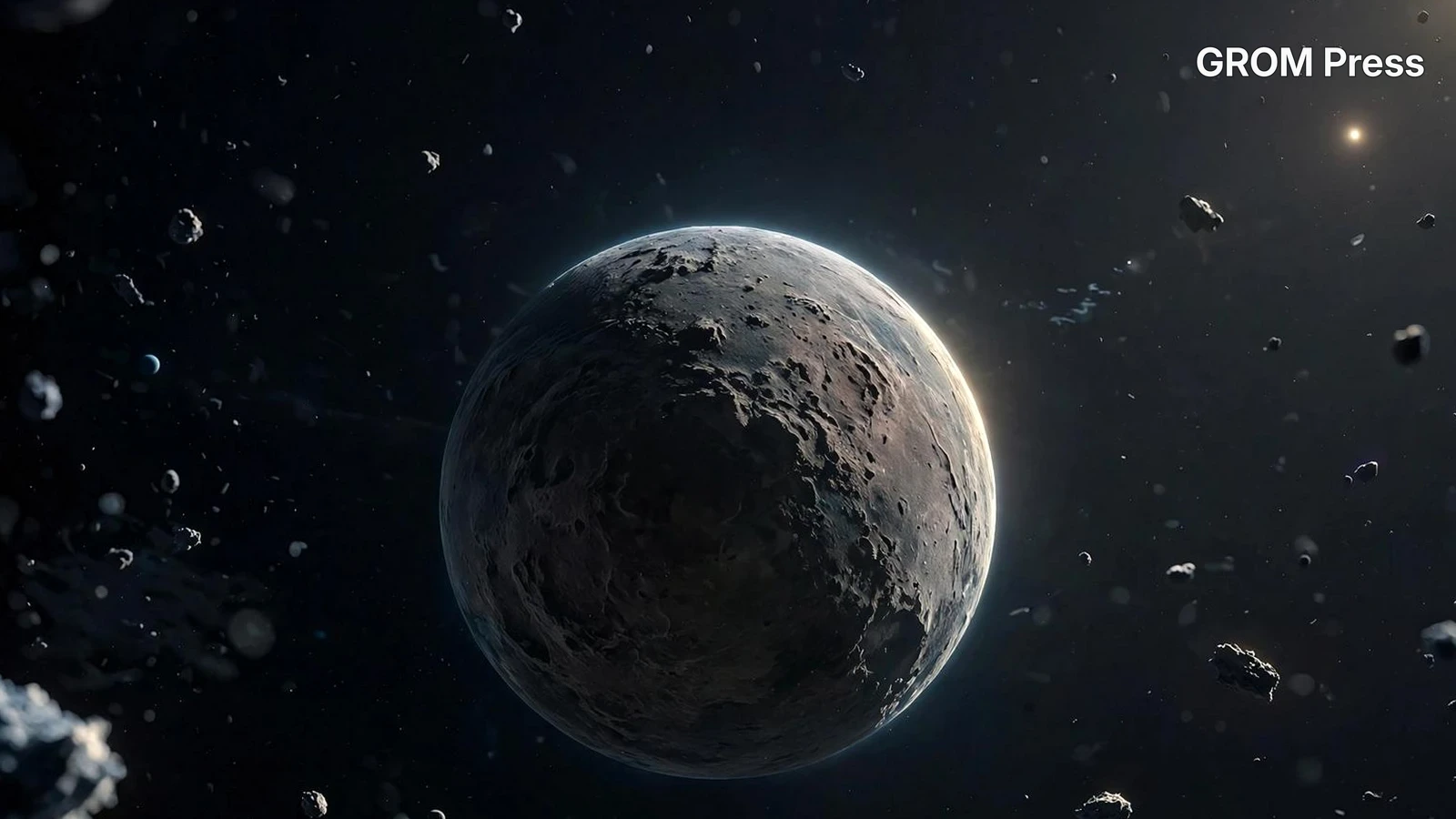
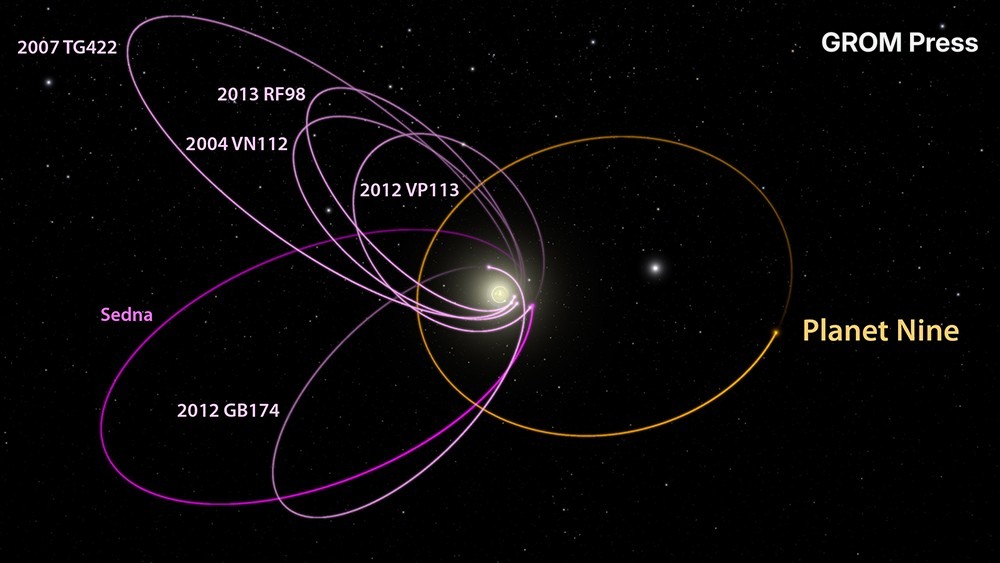
Astronomers from Kindai University in Japan, the University of Washington and the University of Southern Queensland have reported that computer modelling points to a possible second undiscovered planet beyond Neptune, distinct from the long-sought Planet Nine. The team said they studied unusual orbits of trans-Neptunian objects, small icy bodies that orbit the Sun beyond Neptune. Some of these objects have extremely elongated trajectories, while others move at large angles to the plane in which the major planets orbit. Even at their closest approach to the Sun, they remain hundreds of astronomical units away. The researchers said standard models and existing observations do not explain the origin of distant objects with strongly inclined orbits or bodies whose trajectories are barely connected to Neptune's gravitational influence. Sedna and 2012 VP113 were cited as well-known examples.
To test the hypothesis, the team ran numerical simulations of Solar System evolution over 4.5 billion years, accounting for the migration of giant planets, including Neptune's gradual movement under the influence of many small bodies and Pluto-sized objects. They compared results from models with the four known giant planets against scenarios that added one more massive body on a distant orbit. In models including Planet X2, populations formed that matched the locations of known trans-Neptunian objects much better. The hypothetical planet helped explain distant bodies with small orbital inclination, objects with extremely large closest approaches to the Sun, and populations with extremely inclined trajectories. The models also reproduced the orbital characteristics of known extreme trans-Neptunian objects, including Sedna, 2012 VP113 and 2015 BP519.
The best-fitting results were obtained for a planet with about two Earth masses, a semi-major axis of 350-500 astronomical units, a minimum distance to the Sun of about 200 astronomical units and an orbital inclination of 1-15 degrees. The researchers explained that the semi-major axis characterises the size of the orbit, so the distance to the Sun changes during the orbit. For comparison, even at its closest point Planet X2 would remain about 200 times farther from the Sun than Earth. Neptune is about 30 astronomical units from the Sun.
The researchers said Planet X2 and Planet Nine are two different hypotheses. Planet Nine assumes a more massive object, 4-6 times heavier than Earth, intended to explain other features of the synchronisation of distant object orbits. The new work considers these scenarios separately: the potential existence of one planet does not rule out the other object, although neither has been proven.
The model has limitations. Compared with observations from the Dark Energy Survey project, which studied distant Solar System objects, the calculations reproduced the distributions of orbital inclinations and closest approaches to the Sun fairly well. However, the distribution of semi-major axes of detected objects did not fully match observations. The authors acknowledged that their model requires further refinement.
The hypothesis could be checked with new observations from the Vera C. Rubin Observatory in Chile. Its sky survey is expected to detect significantly more trans-Neptunian objects and test whether their orbital distribution matches the predictions for Planet X2 at the edge of the Solar System.




Comments
No replies yet. Start the discussion.
Sign in to reply