
Sber updates Kandinsky to version 6.5 with multi-character video generation
Sber presented Kandinsky 6.5 at the AI Journey conference. The new video model can combine people, objects and locations from different photos into one clip while preserving character appearance, with user-defined first and last frames. Maximum video length is 10 seconds at up to 2K resolution. The image model now renders faces more accurately from photos and handles text and simple infographics better, generating images at 2K resolution, upscalable to 4K via GigaChat. Kandinsky Super Resolution 2.0 supports upscaling images to 8K and video to 2K. Both models are available in GigaChat.
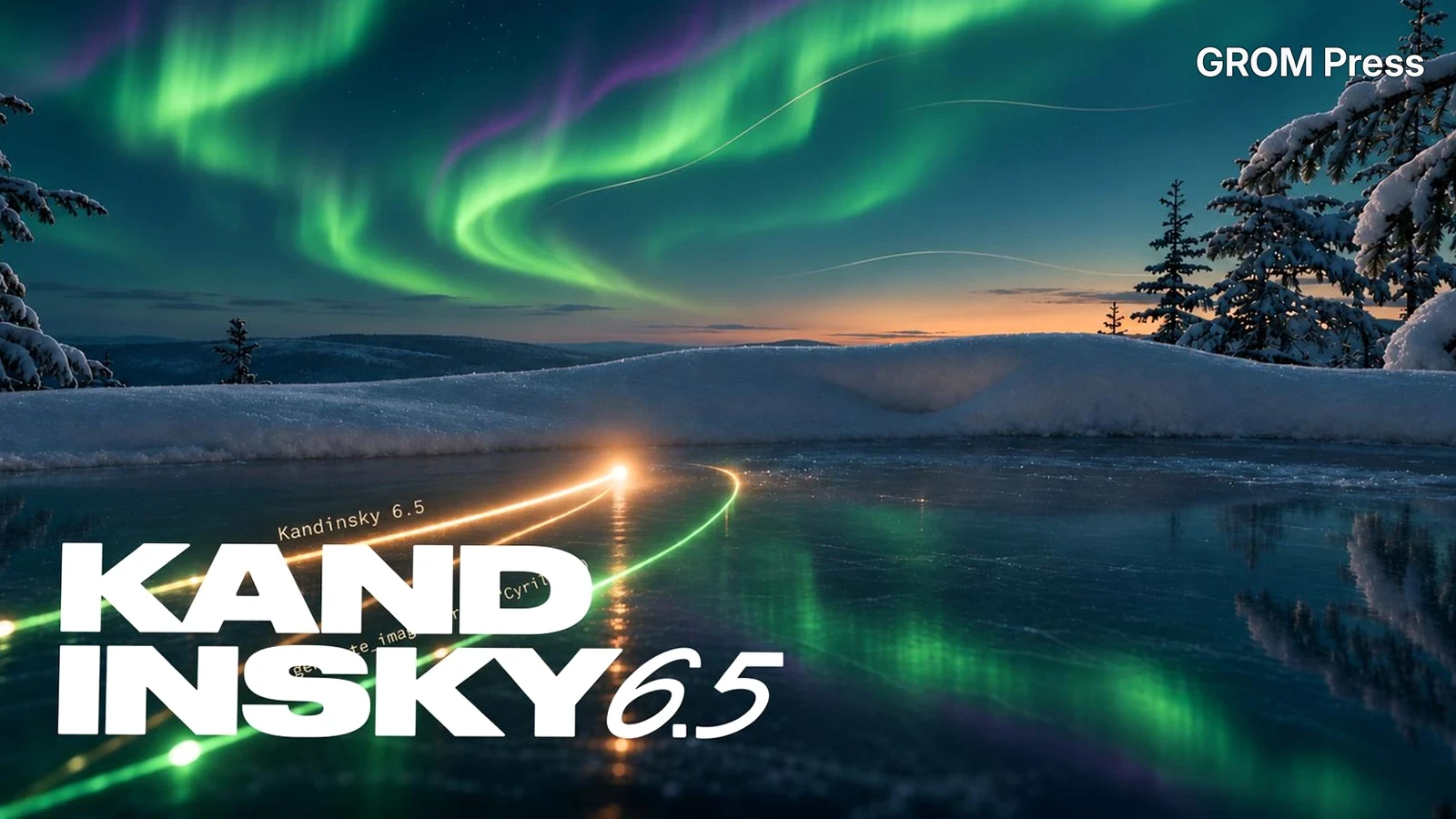
Sber introduced the new generation of Kandinsky 6.5 models for image and video generation at the AI Journey conference.
Kandinsky 6.5 Video can combine people, objects and locations from different photographs into a single video while preserving their appearance throughout the clip. Users can independently select the first and last frames, and the model generates the transition between them. The maximum video duration has increased to 10 seconds, and resolution reaches up to 2K. The developers also improved the generation of speech, music and sound effects.
Kandinsky 6.5 Image now reproduces faces from photographs more accurately, preserving a person’s recognizability when creating a series of images. The model also works better with inscriptions, headings and simple infographics. Images are generated at 2K resolution and can be upscaled to 4K through GigaChat.
Both models are already available in GigaChat: images are created directly in the chat, while video is generated in a separate tab.
Sber also opened access to Kandinsky Super Resolution 2.0, designed to improve the quality of images and video. The image version supports upscaling resolution to 8K, while the tools in GigaChat allow scaling images to 4K and video to 2K. The solutions can be used for printing, outdoor advertising, photo restoration and digital content creation.



Comments
No replies yet. Start the discussion.
Sign in to reply