
Satellites detect largest methane release from a non-erupting volcano at Ethiopia's Fentale
Satellite observations recorded at least 38,200 tonnes of methane and more than 2.9 million tonnes of carbon dioxide from Ethiopia's Fentale volcano between 19 January and 9 April 2025, despite no eruption. Scientists attribute the release to a subsurface magma intrusion that breached a gas-impermeable rock layer, allowing gas from organic-rich sedimentary rocks to escape. The peak methane emission rate reached 157 tonnes per hour, comparable to major industrial gas leaks.

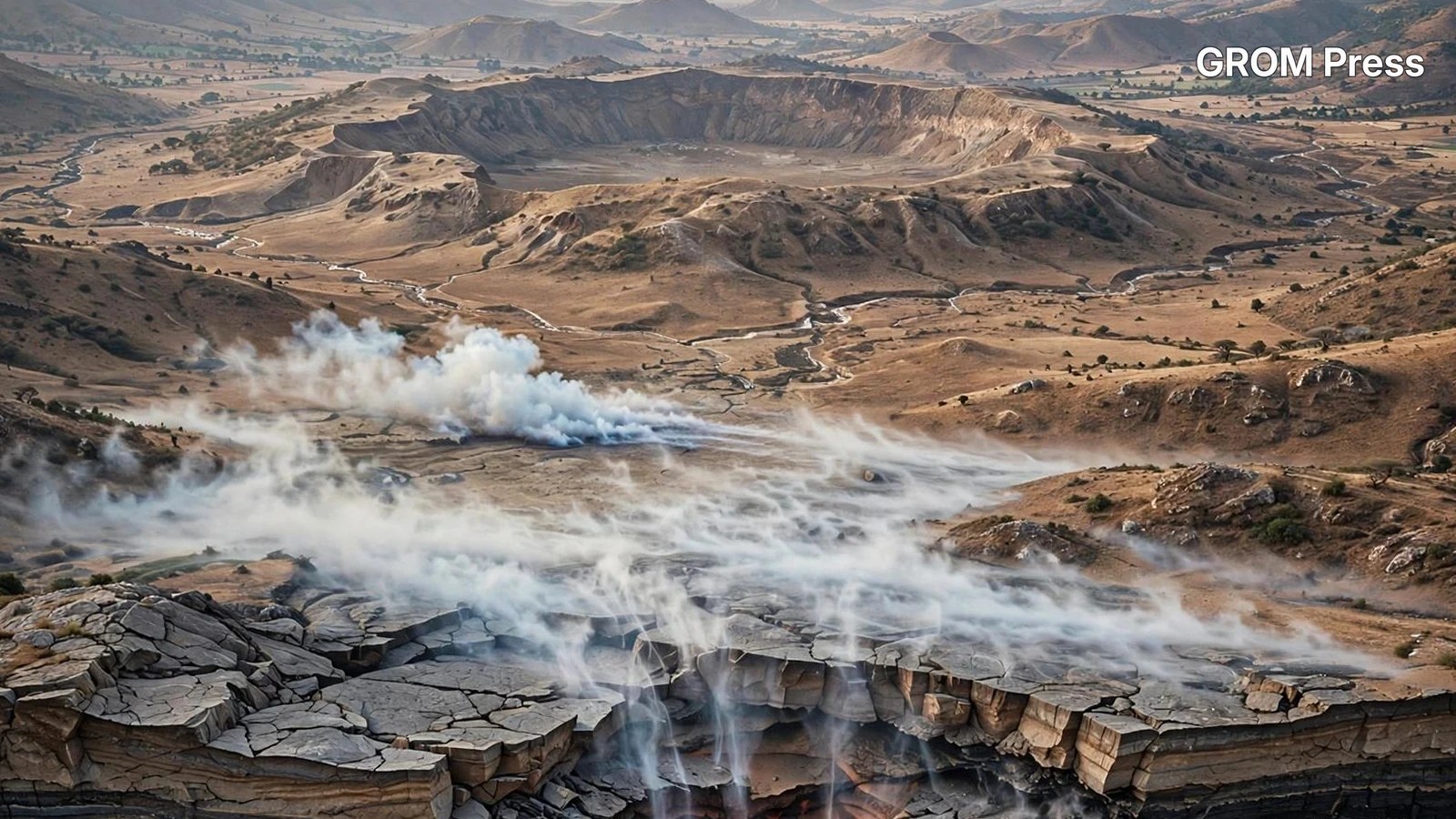
Satellites detected the largest recorded methane release from a volcano that did not erupt, at Ethiopia's Fentale volcano. Between 19 January and 9 April 2025, the volcano emitted at least 38,200 tonnes of methane, with an uncertainty of plus or minus 3,900 tonnes, and more than 2.9 million tonnes of carbon dioxide, with an uncertainty of plus or minus 1.0 million tonnes. The peak methane release rate reached 157 tonnes per hour, plus or minus 41 tonnes, which scientists say is about 10,000 times higher than typical values for other volcanic systems and comparable to major industrial gas leaks. The European Sentinel-5P satellite first detected a powerful methane plume southwest of the volcano on 19 January. GHGSat satellites later confirmed the source was located directly in the caldera, and Tanager-1 recorded several carbon dioxide plumes in February. Researchers link the release to a magma intrusion that began on 17 December 2024 and continued until mid-March 2025. About 1.4 cubic kilometres of magma moved roughly 50 kilometres northward underground without reaching the surface. The intrusion is believed to have broken through a gas-impermeable rock layer, allowing gas accumulated in organic-rich sedimentary rocks beneath the volcano to escape. The last known eruption of Fentale occurred around 1810. Most of the methane, about 33,800 tonnes, was released in the first 31 days, at an average rate of 1,090 tonnes per day. This compares with average rates of about 866 tonnes per day during the 2015 Aliso Canyon gas storage accident in California and about 1,289 tonnes per day during the 2019 gas well accident in Louisiana. The Fentale release represents less than 0.1 percent of annual methane emissions from the oil and gas industry. Emission intensity declined after the initial burst, although a ground collapse of about 56 million cubic metres occurred in the caldera in February, accompanied by a magnitude 6.0 earthquake. Elevated temperatures around the volcano persisted into mid-2026. Scientists consider such episodic releases a potentially missing source of natural methane that is not sufficiently accounted for in atmospheric emission assessments or volcanic hazard evaluations. They also see Fentale as a modern example of processes that may have occurred in the distant geological past, when magma intrusion into sedimentary rocks caused large-scale greenhouse gas release. Researchers state that further satellite monitoring of volcanoes in sedimentary basin regions is needed to determine how often such releases occur and to monitor their consequences.


Comments
No replies yet. Start the discussion.
Sign in to reply