
Homemade floppy3.5 device turns 3.5-inch floppy disks into wireless NAS
Enthusiast BigCrimping has built an open-source handheld device that reads 3.5-inch floppy disks, saves their contents to a microSD card, and shares them over Wi-Fi. It uses an RP2354A microcontroller, an ESP32-S3 chip, a floppy drive, a battery, a monochrome display, and buttons. Files are published on GitHub, and the case can be 3D-printed.
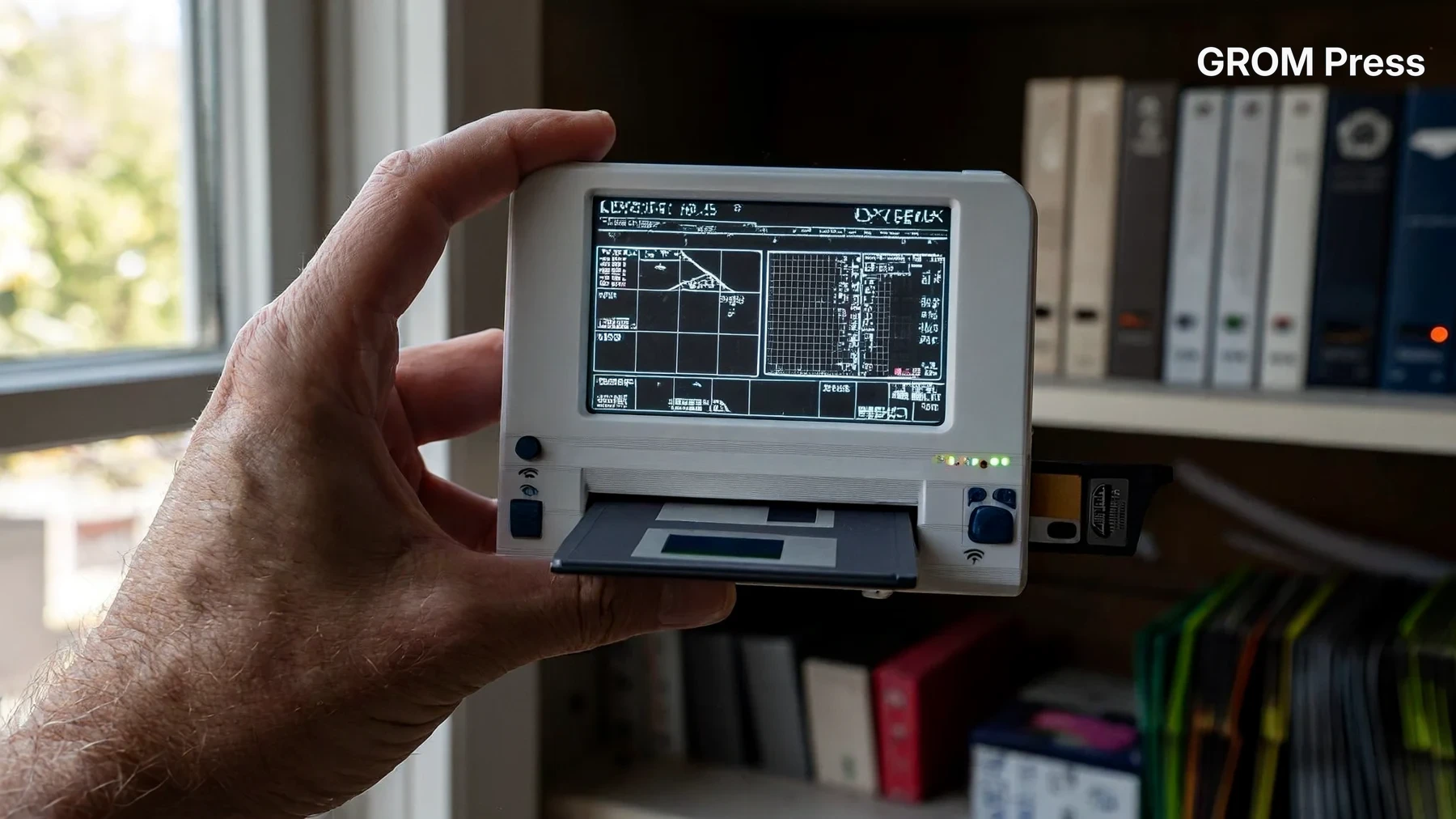
The main event is the release of floppy3.5, a self-made network-attached storage device built around 3.5-inch floppy disks. Its creator, known as BigCrimping, developed the hardware and software and published all necessary files on GitHub, making the project fully open source.
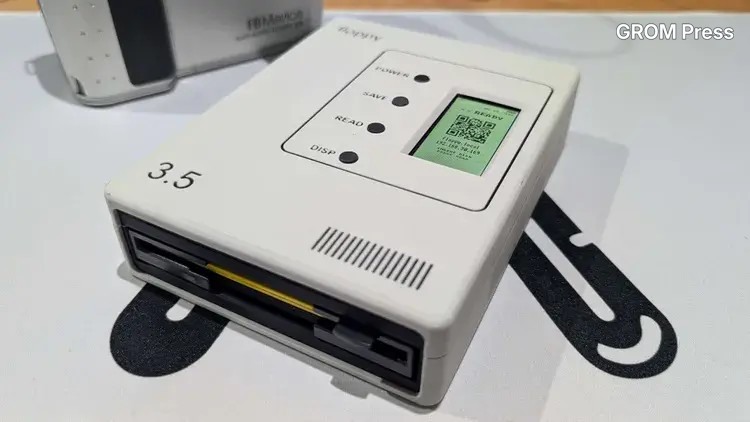
The device is built on a custom printed circuit board containing an RP2354A microcontroller and an ESP32-S3 chip. It also includes a floppy disk drive, a battery, a Wi-Fi module, and a microSD card slot. The enclosure is designed for 3D printing, and the author has provided the corresponding files together with electronics documentation.
Control is handled through a small monochrome display and several buttons. The screen shows the number of sectors and files, as well as a map of working and damaged sectors. The READ button starts reading a floppy disk, while the SAVE button stores its contents on the microSD card. This allows a user to archive an entire collection of disks sequentially, for example in an attic or home archive, without carrying a computer.
Saved data can be accessed through a web interface over Wi-Fi. A direct USB connection is also available and enables additional functions, such as creating full disk images. By default, floppy3.5 supports the FAT12 file system.
Instead of a conventional floppy drive controller, the enthusiast uses the Greaseweazle host protocol, which allows direct control of drive signals. According to the source, this simplifies working with different formats and creating disk images.
The source does not state when the project was launched, whether the device has been tested on specific disk collections, or how many users have built it. No independent confirmation of the device’s performance or adoption is provided.



Comments
No replies yet. Start the discussion.
Sign in to reply