
AI independently confirms first image of black hole M87*
Australian researchers used the GenDIReCT algorithm to reprocess Event Horizon Telescope data from 2017, 2018 and 2021 and independently recovered the glowing ring around the supermassive black hole M87*. The measured diameter was 42.2 ± 1.5 microarcseconds, matching the original 2019 EHT reconstruction. The team estimated the black hole mass at 6.5 ± 0.5 billion solar masses and could not determine its spin.
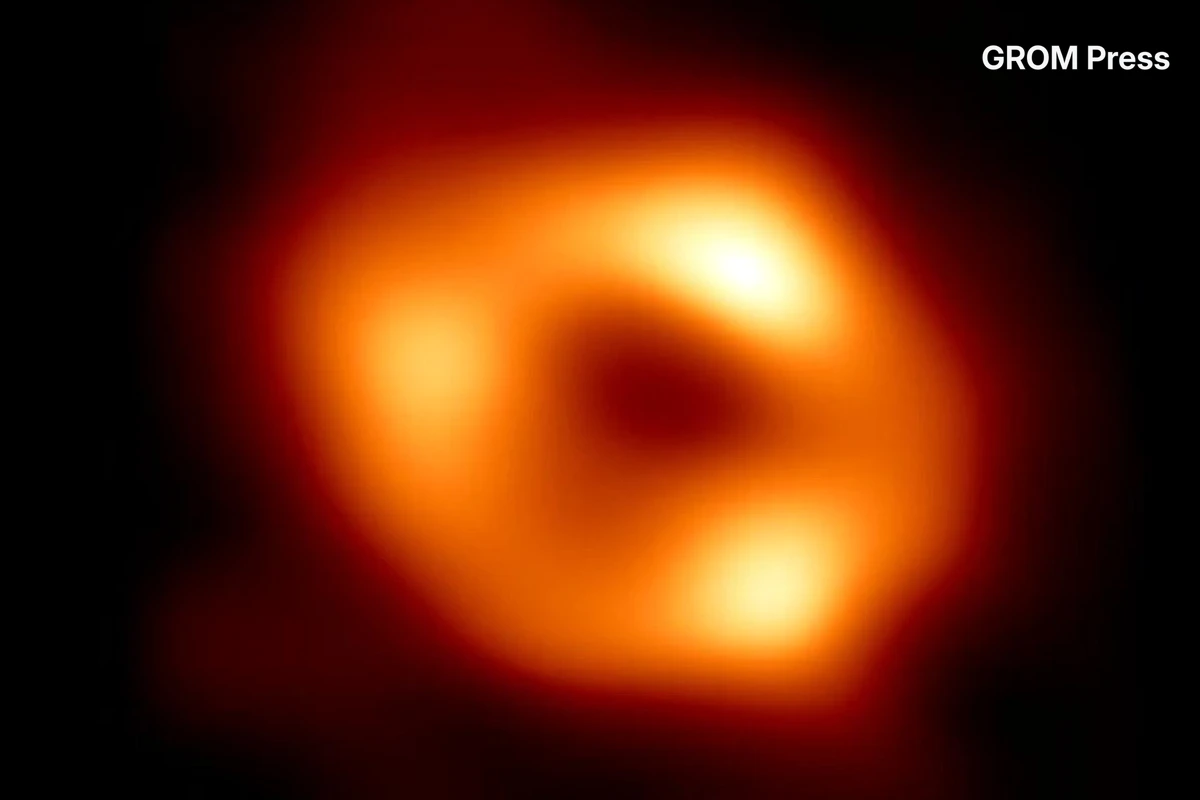
Australian researchers have independently confirmed the first image of the supermassive black hole M87*, published by the Event Horizon Telescope collaboration in 2019, using an artificial intelligence algorithm called GenDIReCT. The team reprocessed the original radio data from the EHT network and recovered the characteristic glowing ring without prescribing its shape in advance.
The Event Horizon Telescope does not take a conventional photograph. It combines radio signals from stations around the Earth into a single virtual instrument the size of the planet. Because the virtual aperture is only partially filled, image reconstruction is mathematically ambiguous, and different algorithms or calibration choices can produce different images of the same observations. Some independent checks of the EHT data had previously questioned even the ring shape of M87*.
GenDIReCT stands for Generative Deep learning Image Reconstruction with Closure Terms. It is based on a generative model with latent diffusion, a machine-learning approach that builds image structure gradually from noise. The algorithm uses special parameters to extract information about the source shape from the radio data independently of calibration errors at individual telescopes. The researchers did not train the model on astronomical images, mainly using ordinary photographs, and they separately tested a version without rings or disks in the training set. No significant change in the final image was found. The algorithm did not require a manually specified black-hole model or parameters tuned to an expected result.
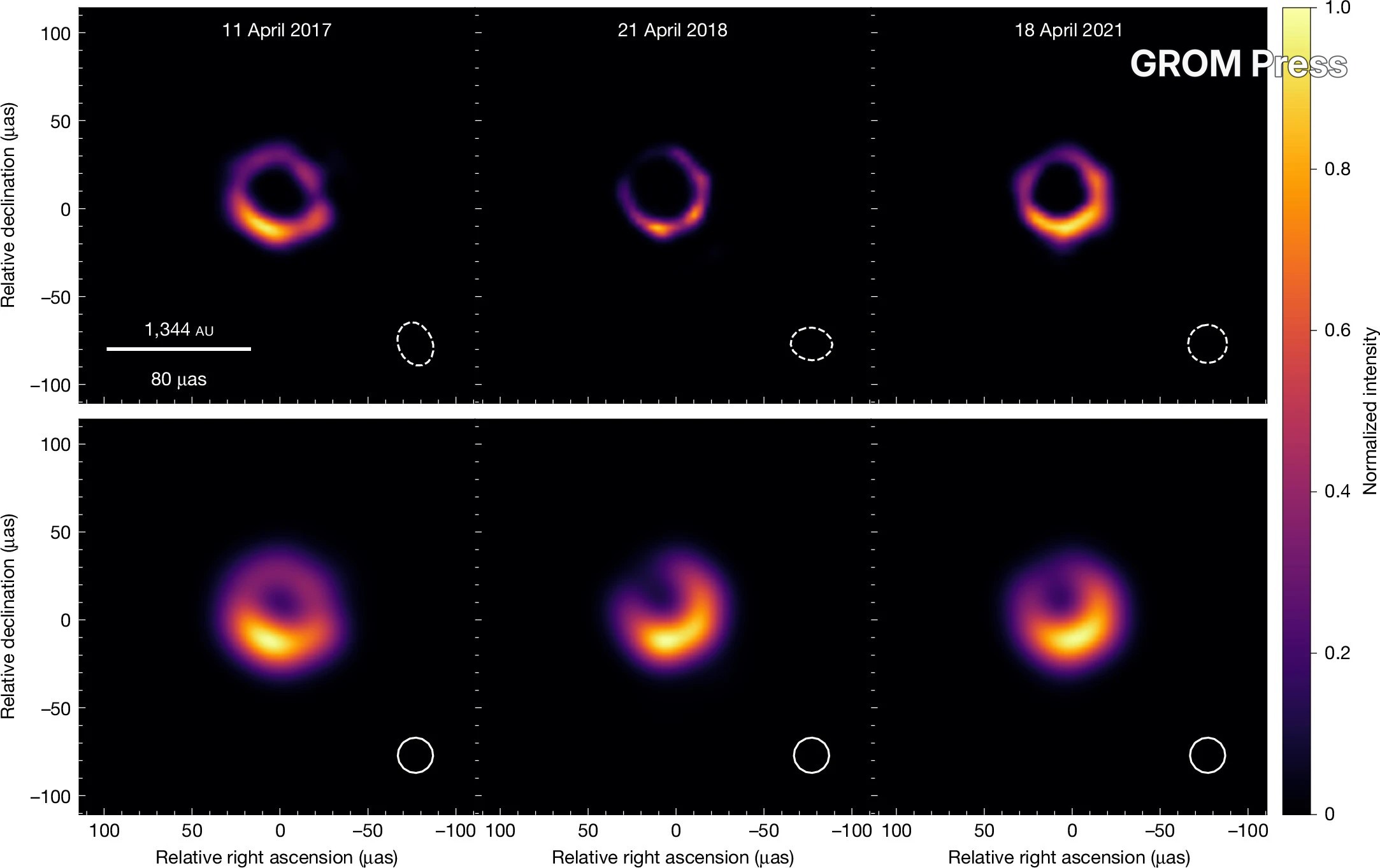
The team used open EHT data from 2017, 2018 and 2021, producing images for each observing run and combining them into a representative reconstruction. In all high-quality observing series, GenDIReCT recovered a ring structure with a diameter of about 40 microarcseconds. The final measurement was 42.2 ± 1.5 microarcseconds, nearly the same as the original EHT analysis. An independent check with an additional Bayesian model gave a close value of 42.3 ± 1.1 microarcseconds. The brightest part of the ring appeared in the southern or south-western direction, and its orientation matched an observing angle of about 20 degrees relative to the relativistic jet pointed toward Earth.
From the measured ring size, the team estimated the mass of M87* at 6.5 ± 0.5 billion solar masses, consistent with previous estimates based on the motion of stars in the galaxy's central region. The authors said the available images were insufficient to determine the black hole's spin. The results confirm both the ring structure of M87* and the original EHT reconstruction, showing that it persists when a fundamentally different data-processing method is used.




Comments
No replies yet. Start the discussion.
Sign in to reply