
Google's Willow quantum chip wins 98.30 percent of rounds in magic square game
Google researchers reported that its experimental Willow quantum processor outperformed classical systems in a non-communicative 3x3 magic square game, winning 98.30 percent of 900,000 rounds compared with a classical maximum of 88.89 percent. The experiment, conducted in Santa Barbara, California, demonstrated quantum contextuality on superconducting qubits, though the game itself has no practical application.
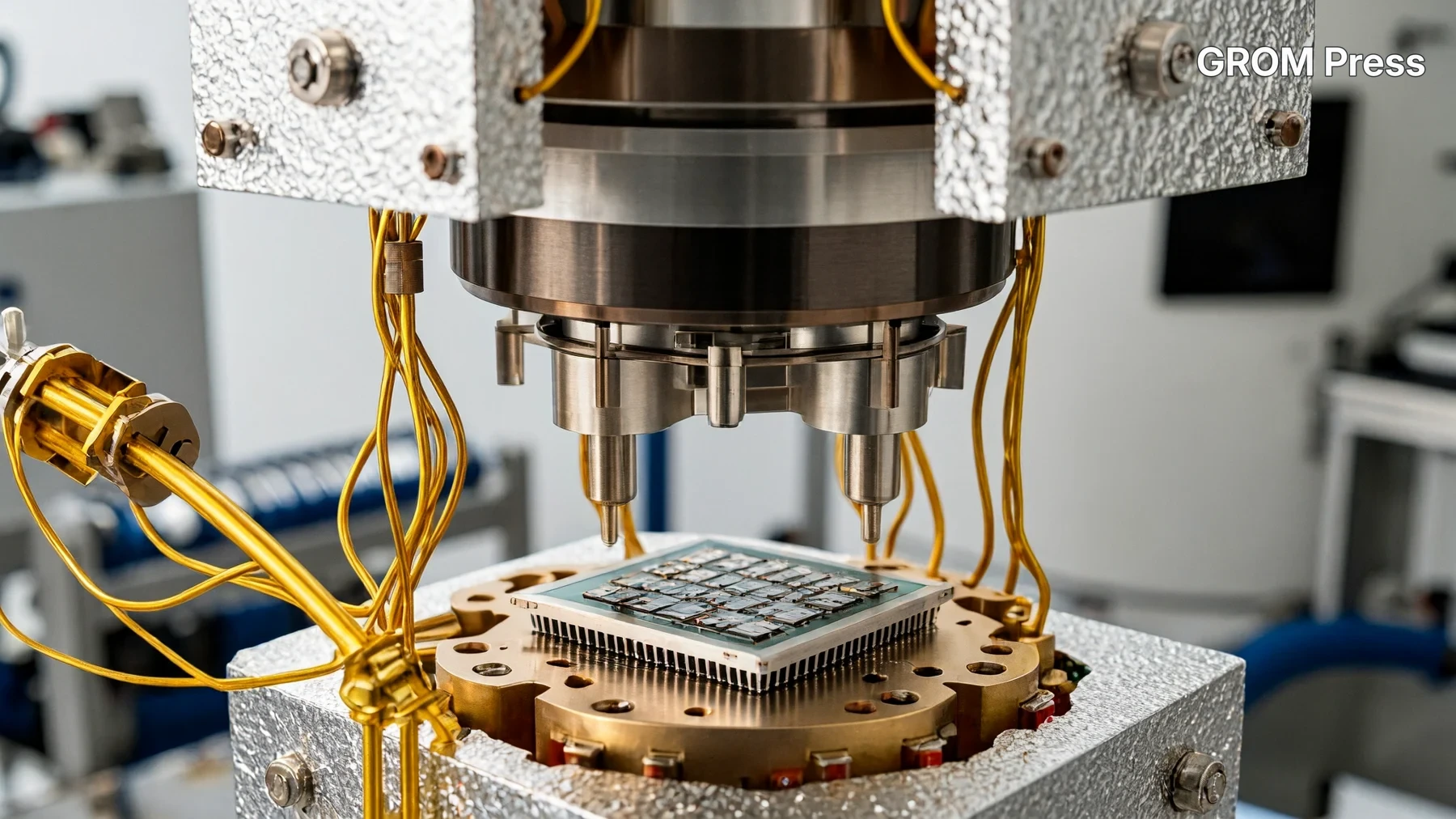
Google researchers said an experimental quantum computer built on the Willow processor surpassed any classical system in a logic game known as the magic square. The result was reported as a demonstration of quantum contextuality, a property in which a measurement outcome is not predetermined but depends on the context of other compatible measurements performed in parallel.
The game involves two participants who must fill a 3 by 3 grid with numbers satisfying specific mathematical conditions while being forbidden from communicating with each other. Google stated that a classical computer can achieve only a limited number of wins, while its machine produced a better result.
According to Google, a classical strategy allows 88.89 percent of wins. Across 900,000 game rounds, the Willow-based system lost approximately once in every 60 rounds, corresponding to a win rate of 98.30 percent.
The experiment was carried out on Google’s quantum computer in Santa Barbara, California. The machine uses superconducting qubits, described as metallic circuits cooled to temperatures close to absolute zero.
Google acknowledged that the game itself has no practical application and called it a toy task that showcases hardware capabilities rather than solving a real-world problem. The company said researchers are focusing not on solving the puzzle but on demonstrating that the effect appeared in a processor Google continues to refine.
Google added that if scientists find a practical way to use quantum contextuality, they could perform computations beyond even the most powerful traditional computers. No timeline for such practical use was provided.

Comments
No replies yet. Start the discussion.
Sign in to reply