
Leash Biosciences raises $11 million to train AI scientists on 44 billion real experiment results
Leash Biosciences has raised $11 million to expand its automated laboratory infrastructure for training AI agents in scientific experimentation. The company says it has synthesized and tested 6.3 million molecules, generating more than 44 billion experimental measurements across nearly 1,000 protein targets. In October 2026 it launched Minos, a set of virtual research environments built on real laboratory data, in which AI agents completed about 100,000 independent experiment sequences in the first six weeks.
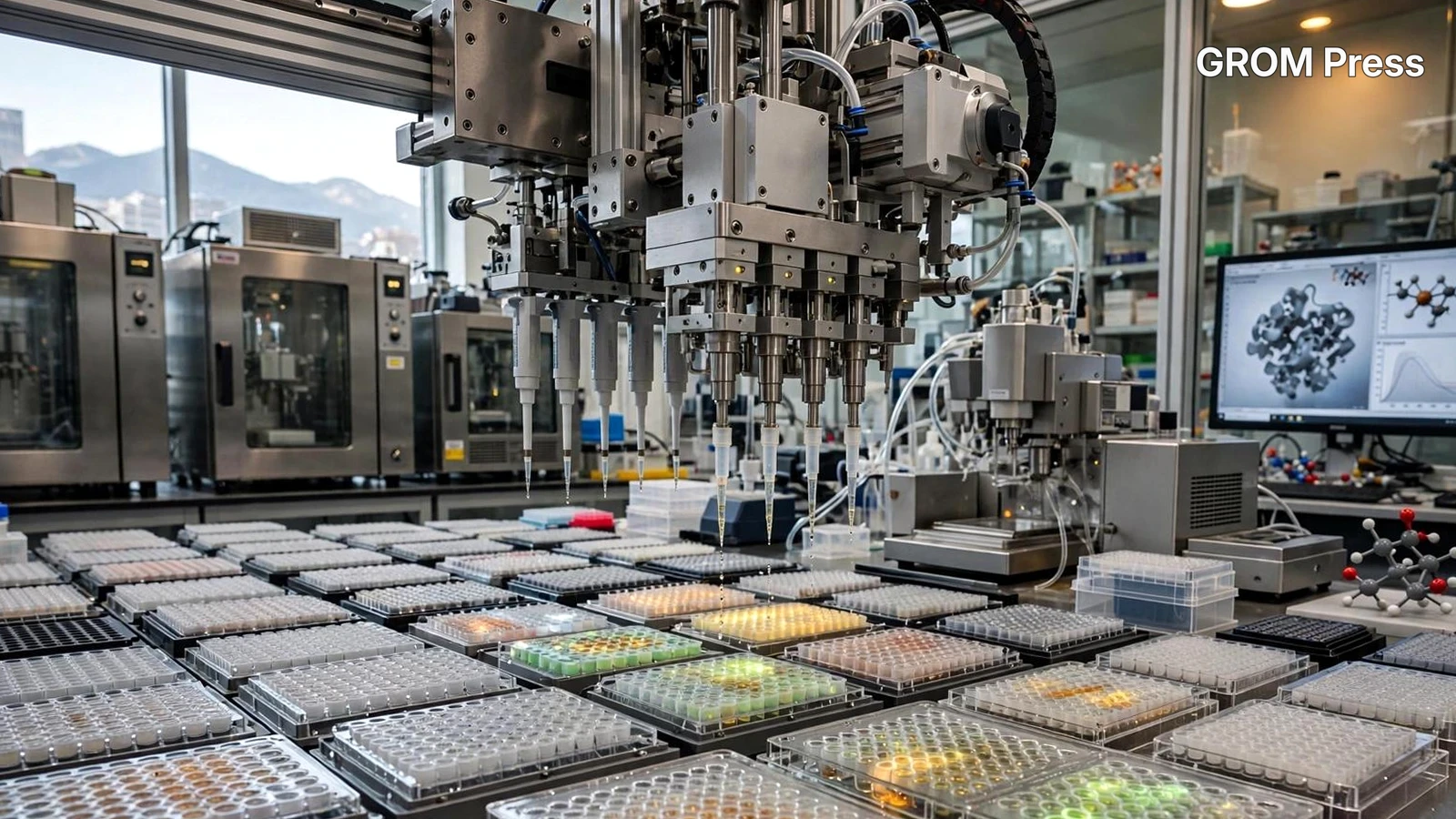
Leash Biosciences, a US startup, has attracted $11 million in funding to develop infrastructure for training AI agents to conduct scientific experiments, the company reported. The funds will be used to expand experiments beyond protein-molecule interactions and to develop partnerships with AI model developers and pharmaceutical companies.
The company said it has already synthesized and tested 6.3 million of its own molecules, obtaining more than 44 billion experimental measurements across nearly 1,000 protein targets. Leash built an automated laboratory that combines molecular screening with a software platform for evaluating and training AI.
In October 2026, Leash presented Minos, a set of virtual research environments built on the results of real laboratory measurements. According to the company, AI agents completed about 100,000 independent experiment sequences in these environments during the first six weeks. The tests revealed weaknesses in current models: they selected unpromising experiments and did not always revise their strategy when new data contradicted initial forecasts.
Leash has published a preprint, individual experimental environments, and thousands of reports on AI agent actions so that other specialists can study their behavior and improve models. The company plans to train scientific models based on how experimental results confirm or refute the decisions made by the models themselves.
The company argues that current AI models for drug development are mostly trained on already published scientific data, while scientific work also requires the ability to independently choose the next experiment, test hypotheses, and change strategy when data contradict them. Leash says its automated infrastructure allows AI to receive results from physical experiments at high speed, whereas in a conventional laboratory a sequence of such experiments can take months or even years.


Comments
No replies yet. Start the discussion.
Sign in to reply