
ROG Xbox Ally X20 review: OLED handheld costs $300 more for largely the same performance
The ROG Xbox Ally X20 is a revised version of last year’s ROG Xbox Ally X, swapping its IPS panel for a 7.4-inch 1080p 120Hz OLED display with 1,400 nits HDR brightness and adding TMR thumbsticks and Xbox-style controls. It keeps the Ryzen Z2 Extreme chip and 80Wh battery, costs $1,299.99 / £1,399.99, and delivers similar gaming performance to the original, with battery life of roughly two to five hours depending on the title and settings.

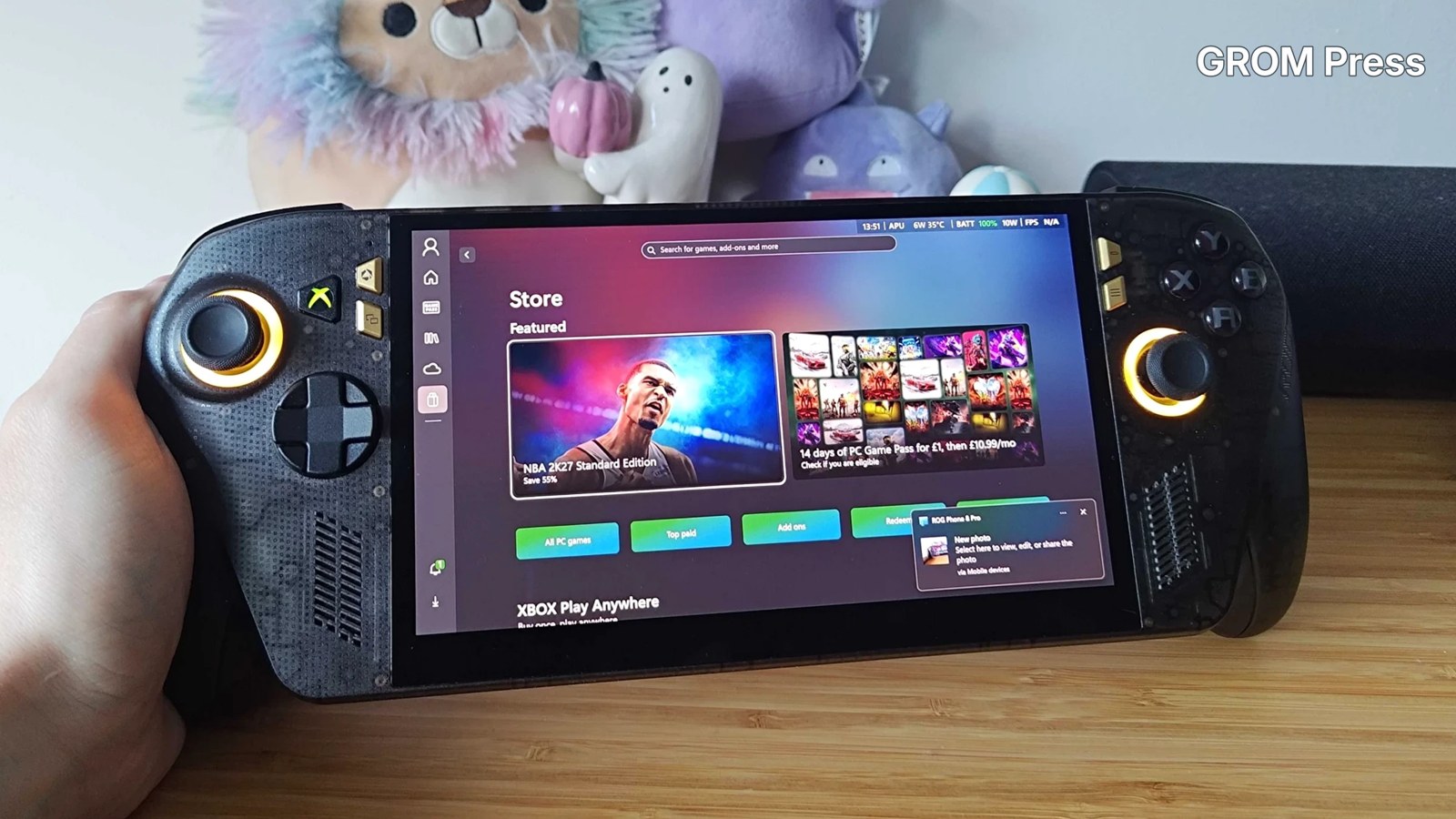
The ROG Xbox Ally X20 is a revised handheld gaming PC from Asus and Microsoft, positioned as an updated version of last year’s ROG Xbox Ally X rather than a generational successor. The most significant change is the display, which replaces the previous 1080p 120Hz IPS panel with a 7.4-inch 1080p 120Hz OLED screen offering 297 pixels per inch, 1,400 nits HDR brightness, 600 nits SDR brightness, and FreeSync Premium Pro support. The reviewer described the OLED panel as a tremendous visual improvement, noting deep blacks, high contrast, and strong daylight visibility, though the glossy surface can produce glare. The device also introduces TMR thumbsticks, which provide improved accuracy and immunity to stick drift, while the face buttons remain unchanged. The D-pad, triggers, and bumpers have been redesigned to feel closer to an Xbox Wireless Controller, with a concave clicky D-pad and dampened triggers. Physically, the X20 has a smoked transparent shell with gold accents, rubberized back grips, and weighs 756 grams, compared with 715 grams for the original. The reviewer found the handheld slightly posher but nearly identical to hold, with the added weight encouraging more elbow support during longer sessions. Performance remains based on the AMD Ryzen Z2 Extreme chip, with no generational silicon upgrade. Benchmarks showed broadly similar results to the original model: Cyberpunk 2077 averaged 52 frames per second at 1080p on low settings without upscaling, down slightly from 54 frames per second on the previous model. Total War: Warhammer 3 reached about 60 frames per second, roughly four frames lower than before, while Shadow of the Tomb Raider delivered 62 frames per second versus 64 frames per second on the original. Star Wars Galactic Racer averaged 115 frames per second on low settings at 1080p, or 70 frames per second on medium settings with AMD FSR enabled. The reviewer attributed small frame differences to Windows updates, game patches, and driver factors rather than hardware changes. The software experience centers on Xbox Big Screen Experience, an overlay for Windows 11 intended to make the handheld feel more console-like. The reviewer said it remains preferable to the Windows 11 desktop, with a carousel tab system and unified library view, but noted that bugs and quirks from the previous model persist, including failure to auto-switch to newly opened applications, launching duplicate game instances, and occasionally ignoring built-in controls. The Epic Games Store was described as problematic on these devices. Battery life is unchanged in principle, with an 80Wh cell. The reviewer recorded roughly two hours of play in demanding titles such as Star Wars Galactic Racer using 30W Turbo Mode, and around five hours with the less demanding MediEvil Recomp. Expected playtimes are around three to four hours in demanding games, with brightness and wattage reduction still necessary to extend endurance. Pricing is $1,299.99 in the United States and £1,399.99 in the United Kingdom, a $300 increase over the previous model. The reviewer concluded that the X20 is one of the best gaming handhelds available but difficult to recommend unconditionally because the OLED screen and refined controls are the main justifications for the higher price, while performance and battery life remain largely unchanged. The device was tested over one month, with benchmarking and qualitative assessment of recent and older titles.


Comments
No replies yet. Start the discussion.
Sign in to reply