
Scientists discover compact Cas12m proteins that can cut DNA
An international team led by the University of Tokyo has identified two Cas12m proteins, UnCas12m3 and UnCas12m4a, capable of cutting DNA with guide RNA. The researchers also restored DNA-cutting activity in inactive variants TfCas12m3 and MmCas12m2 by changing specific amino acids, revealing a structural mechanism involving a two-step deformation of one DNA strand.
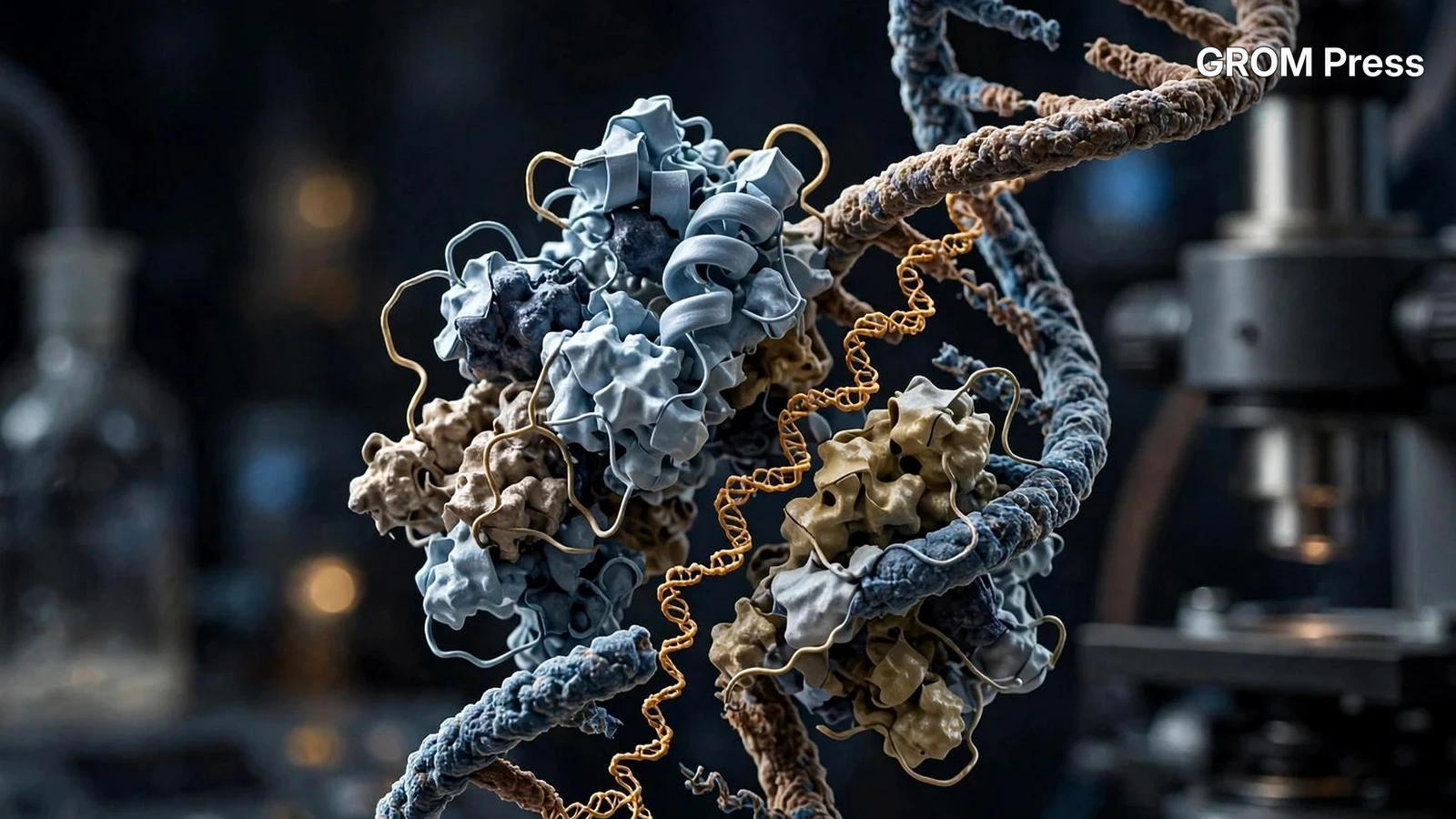
An international research team led by scientists at the University of Tokyo has discovered some of the smallest CRISPR proteins capable of cutting DNA, according to the supplied material. The finding could help create more compact genome-editing tools that are easier to deliver into cells.
The proteins belong to the Cas12m family. Until now, members of this group were known to locate and bind specific DNA sequences, but no DNA-cutting activity had been detected in them, which limited their appeal as genome-editing tools despite their small size.
The researchers screened many Cas12m variants using a specially developed selection system based on the bacterium Escherichia coli. They identified two proteins that can cut DNA with the help of guide RNA: UnCas12m3 and UnCas12m4a. The team states that the inability to cut DNA is therefore not a general property of the entire Cas12m group.
To understand what distinguishes active proteins from inactive ones, the scientists used cryo-electron microscopy, a method that determines the three-dimensional structure of molecular complexes at atomic resolution. The comparison showed that the mere presence of a catalytic RuvC center is not sufficient for DNA cutting. A special two-step deformation of one DNA strand is also required, creating mechanical tension near the site where the break occurs.
Using the structural data, the researchers modified individual amino acids in inactive proteins. They succeeded in restoring DNA-cutting ability in the variants TfCas12m3 and MmCas12m2. According to the material, this means researchers can not only search for naturally active Cas12m proteins but also deliberately engineer new variants by altering specific elements of their molecular structure.
The team also tested the potential of the discovered proteins for genome editing. However, before a universal tool can be created, the authors say they need to improve the efficiency and accuracy of DNA cutting and determine how well the compact proteins work in different cells and whether they are suitable for practical tasks.
The main result of the work, as presented in the material, is the discovery of active Cas12m proteins and the establishment of structural principles that allow them to be turned into molecular scissors.


Comments
No replies yet. Start the discussion.
Sign in to reply